
Corporate Retreat Transport in Sydney: How to Move Your Team Without the Headaches
The retreat venue is booked and the agenda is polished. Then someone asks how 43 people are getting to the Hunter Valley by 9am. This is the guide to getting that part right, written by the people who drive it every week.
Corporate retreat transport in Sydney is the part of the program nobody thinks about until it goes wrong. The venue in the Hunter Valley or Blue Mountains gets months of attention. The facilitator gets three rounds of interviews. Then, two weeks out, someone realises 40 people need to leave the CBD at 7:30am, arrive fresh, move between sessions, and get home safely after the closing dinner.
We have been moving Sydney teams to retreats, offsites and incentive days for more than ten years, including programs for the Royal Australian Navy, UNSW and corporate groups from 8 to well over 100 people. This guide covers what actually matters: matching the vehicle to your headcount, the real logistics of each retreat region, the mistakes planners make every season, and what it genuinely costs. No fluff, just the operational detail you need to brief your provider properly.
The one-sentence version
Pick a vehicle with genuine seat headroom, give your operator the full agenda (not just the pickup time), get the duty of care paperwork before anyone boards, and treat the bus as part of the program rather than a taxi. Everything below expands on those four points.
Planning a bigger reward program? See our corporate and incentive travel page.
Match the vehicle to the group, not the budget line.
The most common transport mistake is booking on price and squeezing the group into the smallest bus that technically fits. A retreat day starts and ends on the vehicle. If the first 90 minutes are spent knees-to-seatback with laptop bags in laps, the facilitator inherits a flat room.
The rule we quote by: the right vehicle is the smallest one that seats the whole group comfortably, with luggage accounted for. If your headcount is at a vehicle's maximum, step up a size. Here is the Sydney fleet mapped to real group sizes.

14-Seat Mercedes Sprinter VIP
The leadership offsite vehicle. Reclining seats, Bluetooth audio and climate control, sized for exec teams, boards and small project groups. A luggage trailer is available for overnight retreats, so nobody rides with a suitcase on their lap.
Best for: board strategy days, partner retreats, senior leadership groups of up to 14.
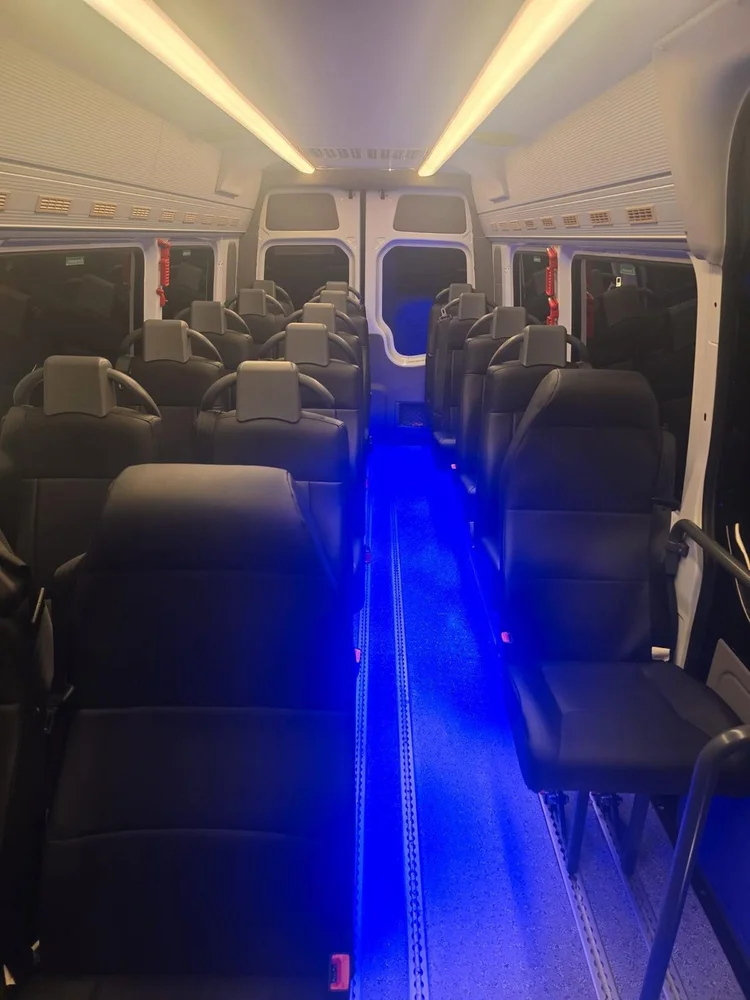
18-Seat Mercedes Sprinter Luxury
Extra-long wheelbase Sprinter with leather seats, an upgraded sound system, USB charging and climate control. This is the one teams talk about afterwards: premium enough for clients, relaxed enough that the ride back from the Hunter becomes part of the retreat.
Best for: teams of 15 to 18, sales kick-offs, client hosting days.
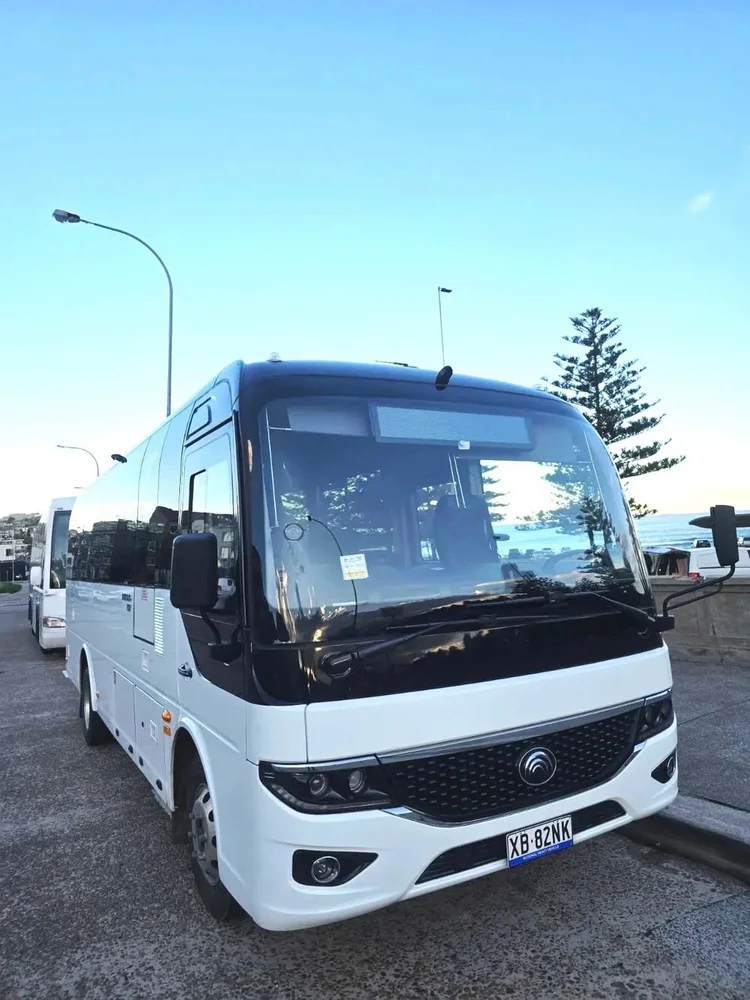
27-Seat Yutong D7 Executive
A 2024-model executive coach with premium bucket seats, woodgrain floors, USB chargers at every seat, Bluetooth and climate control. The sweet spot for a single department or a full small company. A luggage trailer is available for overnight programs.
Best for: department offsites and whole-team retreats of 20 to 27.
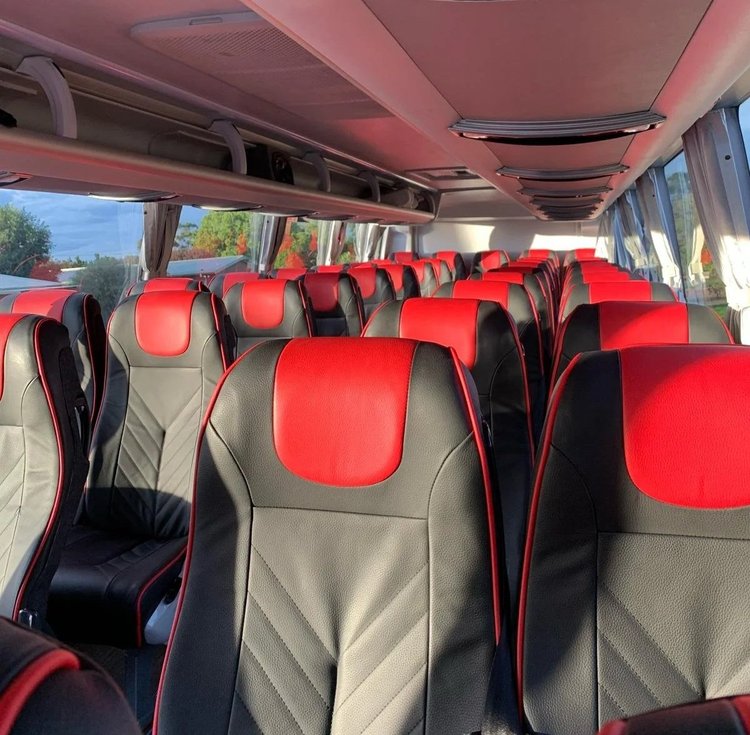
41-Seat Luxury Coach
Full-size luxury touring coach with leather reclining seats, USB chargers, woodgrain floors and underfloor luggage storage, so suitcases for a two-night retreat disappear beneath the cabin. This is the vehicle for moving an entire office in one go.
Best for: company-wide retreats of 28 to 41, conference delegate transfers.
Groups of 42 to 100+
Bigger than 41? You do not need a bigger bus, you need a convoy. Two 41-seat coaches move 82 people; add a Sprinter and you are past 90. Convoys run on a single run sheet with one point of contact, depart together and arrive together, and attract a multi-vehicle rate on the combined total. We have moved conference groups well past 100 this way without splitting the program across staggered departure times.
One caution from experience: never let a provider talk a 29-person group onto a 27-seat vehicle because "it should be fine". Capacity numbers are maximums, not targets. See the full fleet on our Sydney bus charter page.
Step twoSydney to the venue: logistics by retreat region.
Every retreat region around Sydney has its own timing quirks. Here is what we brief clients on for the four most popular runs.
Hunter Valley (about 2 to 2.5 hours each way)
The classic corporate retreat run and the one with the least forgiving arithmetic. A 9am start at a Pokolbin venue means a CBD departure around 6:30am, so most groups either push the first session to 10:30am or travel up the night before. On overnight programs the coach can stay with the group for winery sessions and dinner transfers, or return empty and come back for the trip home; the right answer depends on your evening agenda and we quote both ways. Pair the retreat with a structured tasting afternoon via our Hunter Valley wine tours and the transport does double duty.
Blue Mountains (about 1.5 to 2 hours each way)
Close enough for a genuine day retreat. The catch is the Great Western Highway: leave the CBD after 7:30am and you sit in Penrith traffic with 40 increasingly caffeinated colleagues. We run early, break the trip at a lookout or cafe stop, and have the group at a Leura or Katoomba venue before 9:30am. Winter retreats should build in weather margin, as mountain fog can slow the last 30 minutes.
Southern Highlands (about 1.5 hours each way)
The underrated option: Bowral and Mittagong venues are an easy M31 run with reliable timing, cool-climate wineries for the wind-down session, and far less traffic risk than the northbound runs. Good for single-day leadership retreats where every hour on the agenda counts.
South Coast (2 to 3 hours, day or overnight)
Kiama, Berry and Jervis Bay reward an overnight format. The coastal run down Macquarie Pass or the Grand Pacific Drive is genuinely part of the experience, so we schedule it in daylight and treat the Sea Cliff Bridge as a photo stop, not an obstacle. For day trips, agree the departure-home time in writing before the retreat: the beach barbecue always runs long, and the difference between a 4pm and a 6pm departure is arriving home at a reasonable hour.
Thinking bigger than one venue?
Multi-day East Coast programs, Sydney to the Hunter, the coast, even Byron Bay and the Gold Coast, run on the same logistics backbone with accommodation and touring built in. That is its own planning exercise, covered on our private East Coast tours page.
What retreat planners get wrong (every season).
These four issues cause almost every transport headache we are called in to fix. All four are cheap to prevent and expensive to discover on the morning.
1. Luggage is nobody's job until it is everybody's problem
Forty people on a two-night retreat means forty suitcases plus laptop bags, banners, an AV case and the marketing team's mystery boxes. A 27-seat vehicle does not have underfloor storage, so if your group and gear are borderline, the answer is a luggage trailer or a 41-seater, decided at booking time, not at the kerb. Tell your operator the luggage picture when you book and it becomes their problem instead of yours.
2. Booking a pickup time instead of sharing the agenda
"Pick us up at 7am" is not a transport plan. Your operator should see the whole running order: session start, lunch venue, afternoon activity, dinner time. That is how the driver knows the 20-minute buffer before lunch matters, that the winery is booked for 2pm sharp, and that dietary-driven venue changes shift the route. When we build a run sheet, timing conflicts surface a week out instead of on the day, and venues with strict arrival windows (most tasting rooms and restaurants) get met on time.
3. No wet-weather plan for the outdoor blocks
Sydney retreat season overlaps storm season. If the afternoon is a harbour sail or a bushwalk, agree the indoor fallback and, critically, whether the vehicle is available to reposition the group if plans flip at 11am. A coach that has gone home for the gap day cannot rescue a rained-out agenda. Keeping the vehicle on standby is a line item worth discussing up front; it is much cheaper than a stranded afternoon.
4. Treating transport as a commodity until something goes wrong
The cheapest quote is usually cheap because something is missing: an aging vehicle, a driver subcontracted at the last minute, no support if the day runs late. Ask every provider three questions. Who exactly is driving? What happens if the vehicle has a fault at 6am? Who answers the phone during the program? If the answers are vague, so is the service.
The paperwork that protects youDuty of care: what to have on file before anyone boards.
If you are the organiser, your company's duty of care extends to the bus. For most corporate clients (and every government or education client) that means a paper trail. A professional operator provides all of this without being chased:
The pre-retreat transport checklist
- Written run sheet covering every pickup, transfer, standby block and return, with contact numbers, issued before travel.
- Named driver and vehicle for each day of the program, confirmed in advance, not "a driver will be assigned".
- Certificate of currency for public liability insurance, supplied for your event file on request.
- Accredited operator details: NSW operator accreditation and appropriately licensed drivers for the vehicle class.
- Support every day of the program: a real person reachable on the morning of travel and across multi-day retreats, not an office voicemail.
We supply this as standard because our Navy and university work demands it, and once you have seen a retreat run on a proper run sheet, you will not go back to "the bus should be there around 7".
Step fourWhat corporate retreat transport actually costs.
Operators who hide pricing behind "request a quote" waste your comparison time, so here are our public starting rates. Corporate bus hire starts from $350 for a 14-seater transfer, with half-day charters from $700. These are genuine from-prices for standard weekday hires:
| Vehicle | Point-to-point transfer | Half-day charter |
|---|---|---|
| 14-Seat Sprinter VIP | from $350 | from $700 |
| 18-Seat Sprinter Luxury | quoted per route | from $800 |
| 27-Seat Executive Coach | quoted per route | from $900 |
| 41-Seat Luxury Coach | quoted per route | quoted per program |
Full-day regional runs (Hunter Valley, Blue Mountains, South Coast), weekend dates, 41-seat coaches and multi-day programs are quoted per itinerary, because distance, standby time and overnight positioning genuinely change the number. What you should expect from any quote:
- Itemised, not bundled: per-vehicle pricing, with any multi-vehicle discount shown on the combined total.
- Inclusive of the boring bits: tolls, fuel and a professional driver included, no arrival-day surprises.
- Honest about extras: overtime handled in stated increments if the day runs long, and venue entry or tasting fees always at the group's own expense unless packaged.
- Valid long enough to get sign-off: our quotes hold for 30 days, which matters when procurement is involved.
For current rates across the whole fleet, see the corporate bus hire Sydney page.
Good to knowCorporate retreat transport FAQs.
How far in advance should we book corporate retreat transport in Sydney?
Can one operator move a group of 60 or 100+ people to a retreat?
Do you provide insurance certificates and driver details for our duty of care file?
Can the coach stay with us at the retreat venue overnight?
How much does corporate retreat transport cost in Sydney?
Get a retreat transport proposal.
Send the headcount, dates, venue and a rough agenda, and you will get back a written proposal with vehicle options, an itemised price and a draft run sheet. If the details are still moving, send what you have and we will quote around the gaps.