
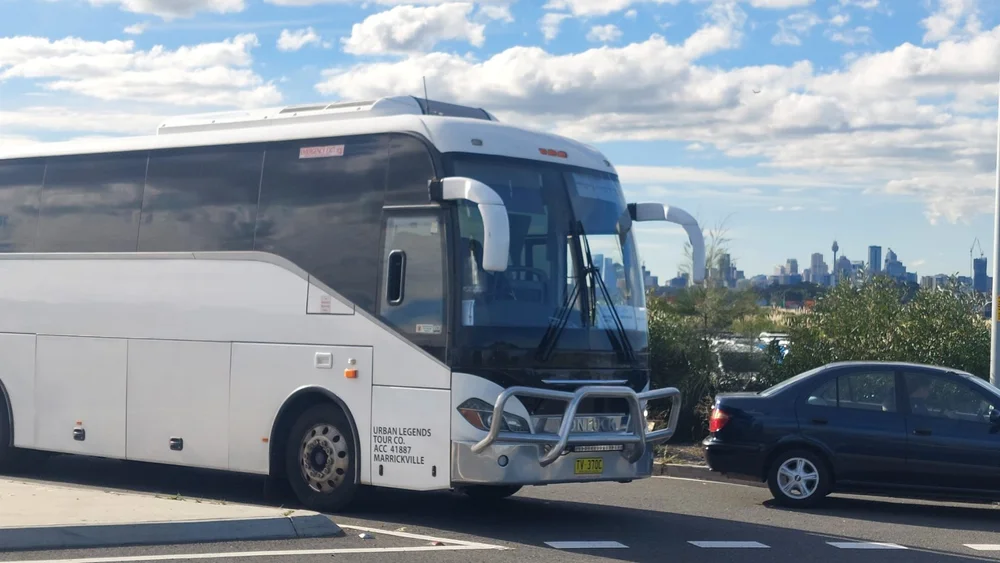
Corporate · Conferences, Offsites & Team Days
Airport, hotel, venue, dinner, airport again. Conference transport in Sydney is about getting every delegate through that loop on time, with nobody left stranded at a kerb. The way to do it is a private charter bus or coach booked per leg, with one operator running the whole schedule instead of a scatter of taxis and rideshares. Below: how conference and offsite transport works in practice, which vehicle suits your numbers, how the price is built, and the five mistakes that wreck a run sheet. We have been moving corporate groups around New South Wales for ten years, and we are rated 4.8 stars from 200+ Google reviews.
What conference transport actually involves
Most organisers think of it as one booking. In practice a conference usually has five separate transport jobs, and they are rarely all on the same day.
- Airport arrivals. Delegates land across a spread of hours, so this is either a small vehicle running several loops or one larger vehicle timed to the biggest cluster of flights.
- Hotel to venue shuttles. The daily workhorse. Same route, same time, usually a morning run and an evening return.
- The offsite or activity session. One run out, a wait, one run back. This is where a conference becomes a day out, and it is the leg most often forgotten in the budget.
- The dinner and the late return. The leg that decides whether people remember the night fondly. Late runs matter more than anything else on the sheet.
- Departures. The mirror of arrivals, and the one most likely to be cut too fine.
Putting all five with one operator gives you a single driver roster, one contact who knows the whole schedule, and no finger pointing when a session runs twenty minutes over and everything downstream shifts.
Which vehicle fits your delegate numbers?
Match the vehicle to your largest single movement, not your total headcount. If 60 delegates arrive across the day but only 38 ever travel at once, you are booking for 38.
| Travelling at once | Vehicle | Typically used for |
|---|---|---|
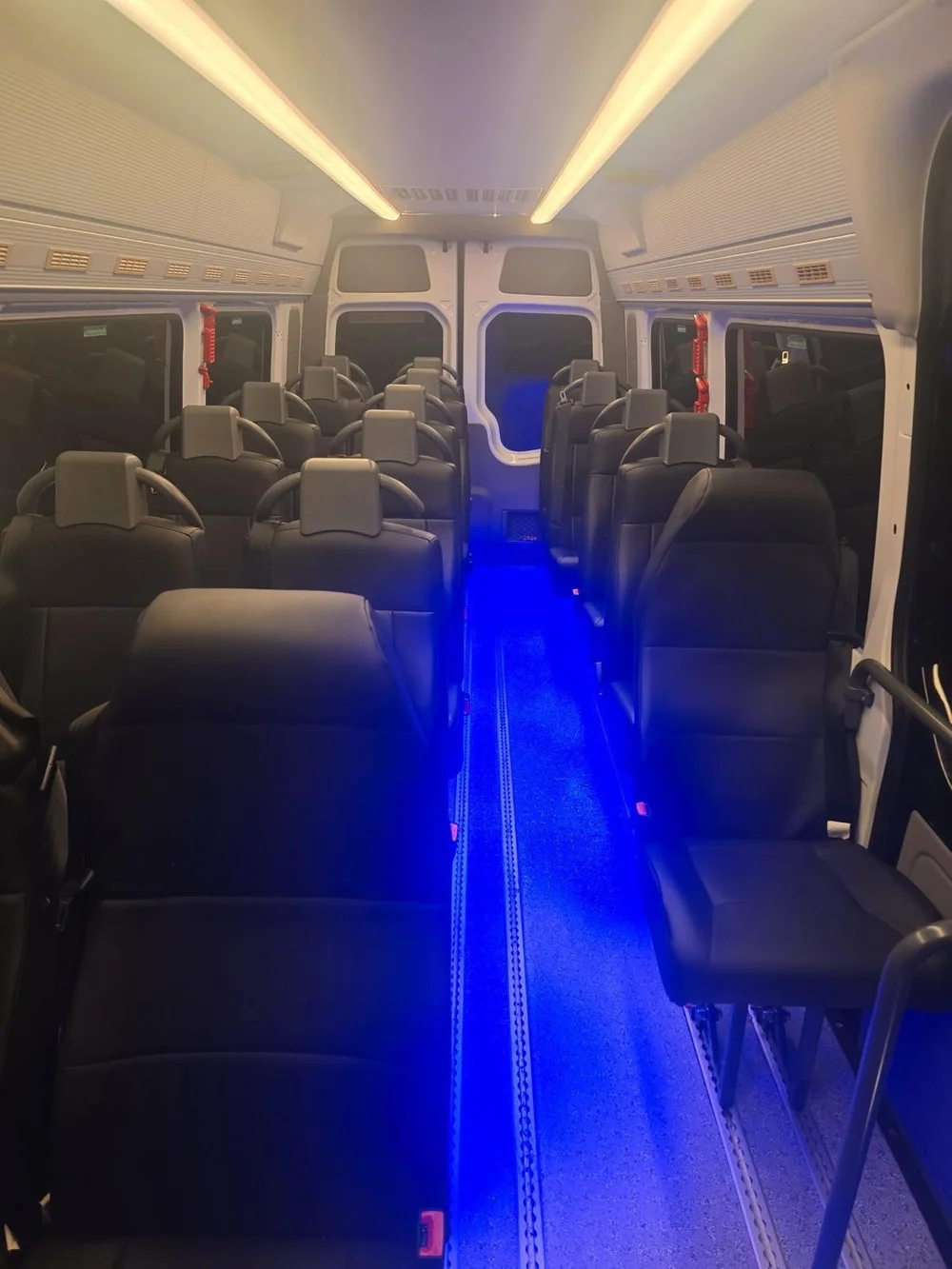
| Up to 14 | 14 seat Mercedes Sprinter VIP | Executive teams, airport loops, speaker transfers |
| 15 to 18 | 18 seat Mercedes Sprinter Luxury | Department offsites, leadership groups |
| 19 to 27 | 27 seat Yutong D7 Executive | Mid size conferences, full team days |
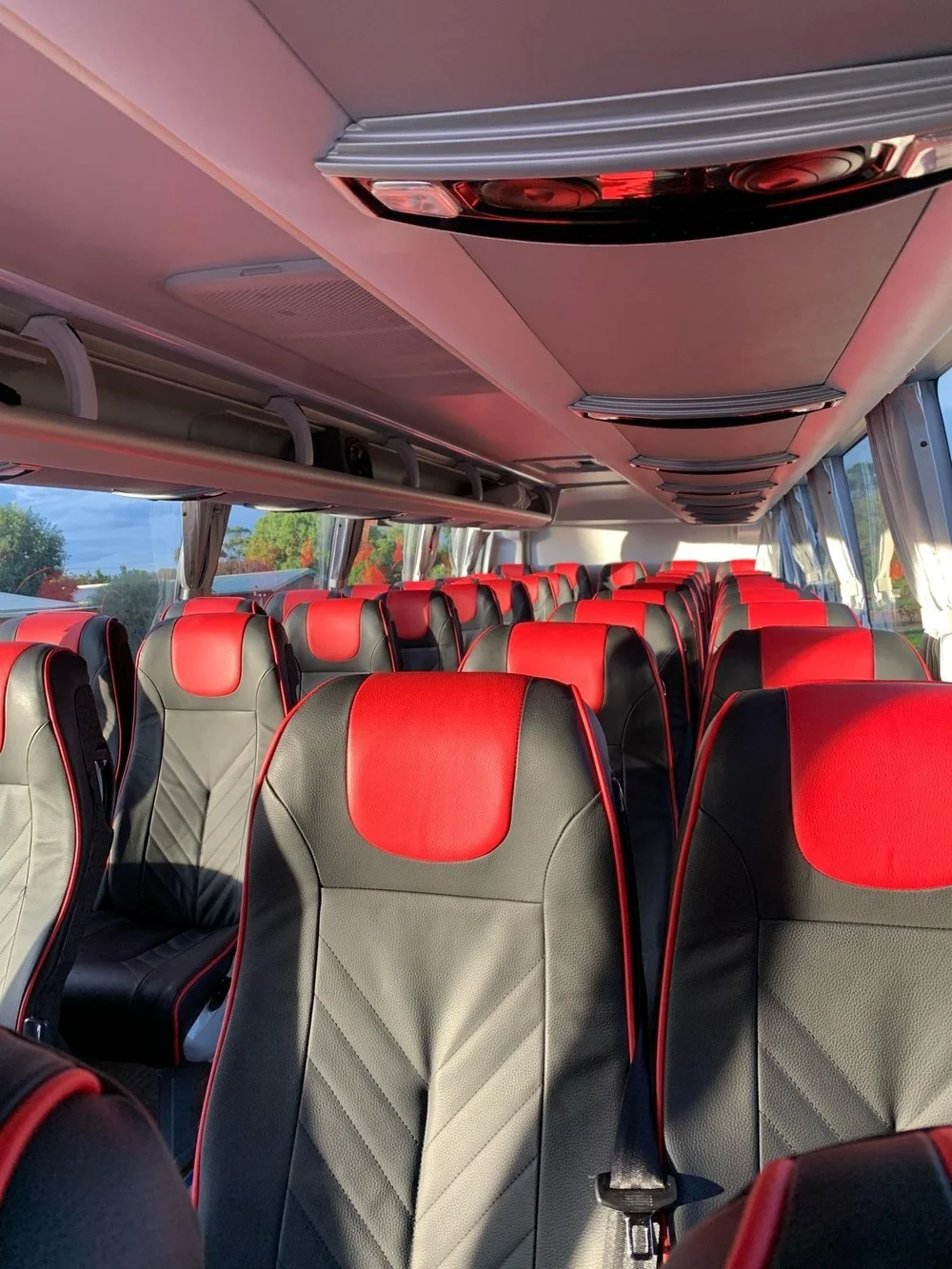
| 28 to 41 | 41 seat luxury coach | Whole conference shuttles, dinner runs |
| 42 and above | Multiple vehicles | Large conferences, simultaneous departures |
One hard rule worth knowing before you plan: capacity is a ceiling, not a target. A group of 28 does not fit a 27 seat coach. If your number lands on a vehicle's maximum, the honest answer is the next size up, and any operator telling you otherwise is setting you up for a problem at the kerb.
How is conference transport priced?
Conference transport is priced per vehicle per job, not per delegate. Four things move the number, and knowing them makes a budget far easier to defend.
- Vehicle size. The single biggest factor. A 41 seat coach costs more to run than a 14 seat Sprinter, so right sizing is the cheapest decision you will make.
- How long the vehicle is committed. A transfer is not the same as a vehicle held all day. If the bus waits through your offsite, you are paying for the wait, which is usually still cheaper than two separate transfers.
- The day of the week. Saturdays carry a 15 per cent surcharge, Sundays and public holidays 20 per cent. Conference programmes that spill into a weekend should budget for it rather than be surprised.
- Distance and positioning. A Sydney CBD loop and a run to the Hunter Valley are different jobs. Regional offsites carry the travel to and from the region.
On the commercial side: repeat corporate clients receive 5 per cent off, which does not stack with other discounts, and established trade accounts can be invoiced on 7 day terms. For a finance team, that last point is usually the one that matters most.
For a full breakdown of charter rates by vehicle and duration, see our corporate bus hire page, or send us the run sheet and we will price the whole programme in one go.
Multi-day conferences and residential offsites
Residential conferences run differently to a day event, because the vehicle and the driver are committed across consecutive days.
Two things worth knowing before you ask for a quote. A driver on a multi-day job away from base needs accommodation and meals, and that sits in the quote rather than appearing later as a surprise. Days quoted and confirmed together as one programme are priced as one deal, which is almost always better value than booking each day separately as it comes up.
The Hunter Valley, the Southern Highlands, the Blue Mountains and the South Coast are the four regions Sydney conferences most often decamp to, and each is a comfortable coach run from the CBD. If you are weighing up a residential offsite, our guide to corporate retreat transport goes deeper on the planning side.
What procurement will ask you
If your company has a procurement or risk function, the transport booking will be checked before it is approved. The questions are always the same five, and having the answers ready turns a week of back and forth into one email.
- Is the operator accredited? Passenger transport in New South Wales is an accredited activity. Ask for the accreditation number and keep it on file with the booking.
- What insurance is carried? You want public liability confirmed in writing. Most corporate risk teams ask for a certificate of currency, and any established operator will send one without fuss.
- Are the drivers properly licensed and rested? Driver fatigue rules are not optional, and they are the reason a genuine operator will push back on a schedule that looks fine on a spreadsheet but is not legal to drive.
- What happens if a vehicle breaks down? Ask what the backup is. An operator running a single vehicle has a different answer to one running a fleet.
- What are the cancellation terms? Conferences move. Know the terms before you sign rather than on the day you need them.
There is more to it than paperwork. Moving your staff is a duty of care obligation, and a rideshare scramble after an event with a bar tab is the scenario your risk team is actually worried about. A booked vehicle with a named driver and a known finish time takes that risk off the table, and that is usually the argument that gets the transport line approved.
Shuttle loops or a single run?
This one decision shapes both the cost and how the day feels for delegates. It depends on how tightly your group moves together.
A single run is one vehicle large enough for everyone, departing once. It is the cheapest option per head, it is the simplest to communicate, and it works whenever the whole group is genuinely ready at the same time. The catch is that it is unforgiving: the bus leaves when it leaves, and anyone running late is finding their own way.
A shuttle loop is a smaller vehicle running the same route repeatedly across a window. It costs more in vehicle hours but it is far more forgiving, and it suits arrivals, hotel to venue runs in the morning, and any situation where people trickle rather than move as a block. For a conference of any size the usual answer is a loop in the morning and a single run at night, because mornings are staggered and nights are not.
If you are not sure which way your event falls, send us the timings. We will tell you which is cheaper for your specific schedule rather than guessing at it.
Five mistakes that derail conference transport
We see these five again and again. Every one of them can be fixed at the planning stage.
- Booking for the headcount instead of the movement. Sixty delegates does not mean a sixty seat requirement. Map each leg and size each one.
- Forgetting the late return. The dinner is booked, the bus home is not, and forty people are standing on a kerb at 10pm competing for rideshares. Book the return leg at the same time as the outbound.
- No buffer between sessions. Conference sessions run over. A schedule with zero slack turns one delay into five.
- One contact who is also presenting. Whoever the driver calls needs to be reachable, and that cannot be the person on stage. Nominate someone else.
- Leaving luggage to chance. Delegates checking out and heading straight to a final session need somewhere for bags. Confirm whether your vehicle has luggage capacity, because not every vehicle does, and a trailer may be needed.
Pairing transport with the offsite itself
If your conference includes a team session, the transport and the activity are easier to plan together. A chauffeured run to wine country, a brewery circuit or a harbour afternoon all work as the social half of a conference programme, and all of them are considerably better when nobody in the group is driving.
Our guide to team building activities in Sydney covers the options in detail, and for reward and recognition programmes our incentive travel page is the better starting point.
Conference transport FAQs
How far in advance should we book conference transport?
As soon as the venue and dates are locked. For conferences in spring, summer and the end of year period, good vehicles are committed months ahead, and the weekend dates go first.
Can one booking cover several days of a conference?
Yes, and it is usually better value. Days quoted and confirmed together are priced as a single programme rather than as separate jobs booked one at a time.
Can you invoice our company directly?
Yes. Established trade and corporate accounts are invoiced on 7 day terms. For a first booking, the payment steps are set out on your quote.
Can the bus wait between sessions, or does it leave and come back?
Either. If the gap is short or the venue is a long way from our depot the vehicle stays with you, which is generally cheaper than two separate transfers. If the gap is long and the depot is close, two transfers can work out better. Send us the timings and we will tell you which way is cheaper.
Can you handle airport pickups for delegates arriving at different times?
Yes. The usual approach is a smaller vehicle running several loops, or a single larger vehicle timed to the biggest cluster of arrivals with transfers covering the stragglers. Which is cheaper depends on how spread out the flights are.
What happens if a session runs over and we are behind schedule?
The driver waits and works to the new timing. The first fifteen minutes past the booked finish are free, and beyond that overtime is charged in fifteen minute blocks at the vehicle's hourly rate. Tell your nominated contact early and it is rarely a problem.
Getting your programme priced
Send us the run sheet, even a rough one. Dates, the venue, how many delegates move at once and roughly when, and we will come back with the whole programme priced per leg so you can see exactly where the money goes. If the schedule is still moving, quote it anyway and we will reprice as it firms up.
Ten years, a modern fleet, professional drivers who know Sydney, and 4.8 stars from 200+ Google reviews.